
English| EUR
Suggested for you
More currencies
Choose a language
Las Catalinas Islands sit in the warm Pacific current off Guanacaste, where water temperature, visibility, and marine activity shift with the seasons. This guide covers the logistical details that shape every dive—what the thermocline does, when surge picks up, and what gear the conditions demand.
Quick answer
How is scuba diving in costa rica at Las Catalinas? Water temperature holds between 75°F and 82°F year-round, with the warmest months from May through November and cooler upwelling from December through April. Visibility ranges from 30 to 80 feet depending on season and plankton bloom. A 3mm wetsuit works for most divers in warm months; a 5mm suit is standard during cooler upwelling periods when nutrient-rich water draws larger pelagic species.
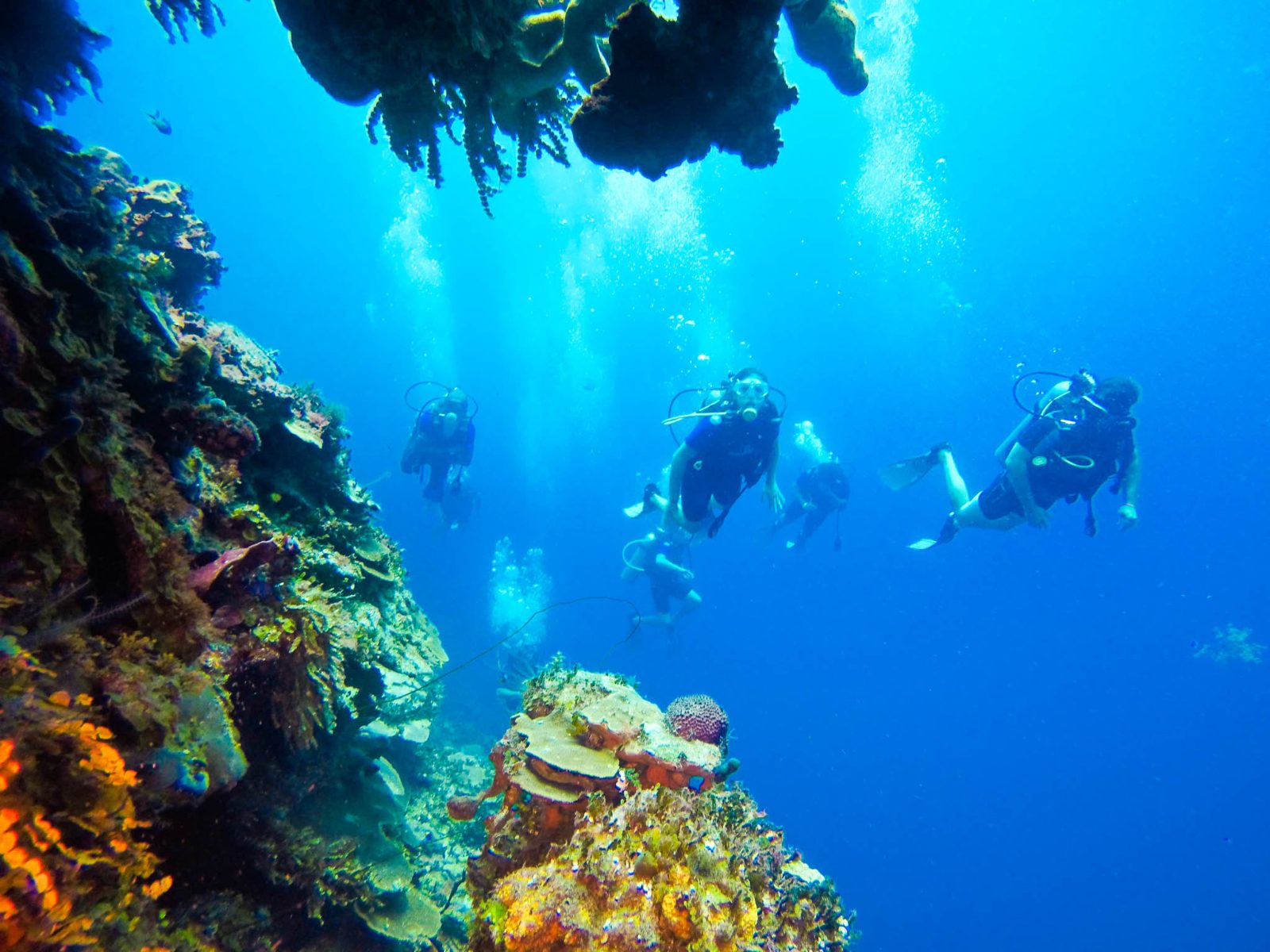
The Pacific coast of Guanacaste experiences two distinct oceanographic phases that define scuba diving costa rica conditions. From December through April, the Papagayo winds drive cold, nutrient-dense water up from the thermocline. Surface temperature drops to 75°F, visibility tightens to 30-50 feet, and plankton concentration rises. That turbidity is not a drawback—it attracts manta rays, mobula rays, and seasonal bull sharks to the cleaning stations and rocky pinnacles around Las Catalinas Islands. From May through November, the water warms to 80-82°F, visibility opens to 60-80 feet, and surge diminishes. This is the window for macro photography and reef exploration. The same sites that host pelagic action in the dry season reveal nudibranchs, frogfish, and octopus in the rainy months. Most operators supply full rental gear—BCD, regulator, wetsuit, mask, fins—but serious underwater photographers bring their own housing systems. Nitrox fills are available at the departure point for divers with advanced certification. Current strength varies by site and tide. The northern edge of the islands sees moderate drift during tidal exchange, while the southern bays remain calm enough for check-out dives and navigation training. Morning departures between 06:30 and 08:00 offer the best combination of light, sea state, and animal activity. Afternoon wind picks up after 13:00, particularly in the dry season, which is why the best arrival window for scuba costa rica trips clusters in the early hours. Two-tank dives typically return by early afternoon, leaving enough surface interval for a second outing or shore exploration. Water entry is from pangas—small outboard boats that anchor near the dive sites rather than mooring. Certification requirements follow PADI and SSI standards. Open Water divers can access most sites; Advanced Open Water or equivalent is required for deeper walls and offshore pinnacles where thermoclines and down-currents appear. Dive operators based in Playa Hermosa and Playa del Coco run daily trips to Las Catalinas, with group sizes capped at six to eight divers per guide. The islands remain undeveloped, so there are no facilities on-site—everything launches from the mainland.
“The same rocky pinnacles that draw bull sharks in the dry season reveal octopus and frogfish when the water clears.”
The most favorable time to dive at the Las Catalinas Islands occurs during the dry season, specifically from December through April, when sea conditions remain calm and underwater visibility is highest. Morning hours are preferred to ensure optimal light and encounter marine life before afternoon winds increase.
Water 78–82°F; high visibility
Clear conditions provide the best environment for spotting rays and schooling fish.
Water 80–85°F; variable visibility
Nutrient-rich waters increase marine activity, though surface conditions can fluctuate.
—
Calmer seas and consistent wildlife activity favor early departures over afternoon sessions.
Verdict: The optimal period for diving is the dry season, ideally during morning hours between 06:30 and 13:00, to capitalize on stable surface conditions and clear water.
Proper preparation ensures safe diving conditions and smooth logistics at Las Catalinas Islands.
The Las Catalinas Islands are situated off the coast of the Guanacaste province. Access requires coordination with private tour operators, as there is no public ferry or direct land route to the islands.
Drive via Route 911 to Potrero or Flamingo beach access points
Private charter departure from Potrero or Flamingo marinas
The best arrival window is 06:30–13:00, as morning departures are standard for optimal sea conditions and wildlife visibility.
Excursions to the Las Catalinas Islands are available daily to accommodate dive planning. Operators maintain consistent availability throughout the week.
Access to the Las Catalinas Islands is free for all visitors. Scuba diving activities require arrangements through private tour operators.
Verdict: While island access is 0 USD, visitors pay private operators for scuba diving services based on the specific tour package selected.
Everything you need to know about how is scuba diving in costa rica
Scuba diving at the Las Catalinas Islands is characterized by volcanic rock formations and high concentrations of marine biodiversity, including rays, sharks, and schooling fish. Many divers find that how is scuba diving in costa rica depends largely on current strength and seasonal nutrient upwellings. Understanding how is scuba diving in costa rica helps you prepare for the varied pelagic life found near these islands. Travelers often research how is scuba diving in costa rica to better manage expectations regarding the underwater terrain and visibility levels.
Morning departures between 06:30–13:00 are recommended for optimal sea conditions and wildlife visibility. This window avoids the stronger afternoon winds that frequently impact surface conditions in this region of Guanacaste. Planning your arrival within this time frame ensures you maximize your potential for calm waters and successful dives.
There is a 0 USD entrance fee for the islands themselves, as they are public marine areas. All scuba activities are conducted via private tours that manage logistics and maritime access. You should plan your budget around private excursion costs rather than island entry fees.
Water temperatures typically range from 24°C to 29°C depending on the time of year and the presence of thermoclines. Divers should consult with their local operator to determine if a 3mm or 5mm wetsuit is appropriate for the current conditions. Seasonal shifts in temperature can significantly impact which marine species are active during your visit.
Most professional dive operators provide rental equipment including tanks, weights, BCDs, and regulators for their excursions. It is standard practice to confirm your gear requirements with the dive shop in advance to ensure proper sizing and availability. Bringing your own mask or computer is optional but recommended for comfort and familiarity.
Youth participation in diving depends on certification levels and the specific policies of the tour operator regarding age and depth limits. Younger visitors may participate in discover scuba programs if they meet health and physical requirements set by international training agencies. Always verify the specific age mandates with the operator before confirming your booking.
The region experiences varying surface conditions and visibility influenced by tides and lunar cycles. Divers should be comfortable with potential current and perform a proper check-out dive if they have been inactive for a period. Engaging with experienced local guides is the most effective way to navigate the underwater topography safely.